Why visit
Bahia Palace is one of Marrakech’s best-known historic monuments. The Ministry of Culture describes it as built in two phases over about eight hectares during the second half of the 19th century: first the house of Si Moussa, with its large riad, northern courtyard and annexes, then an expansion from 1894 by his son Ba Ahmed, who combined several neighbouring houses into a palace over about six years.
What to experience
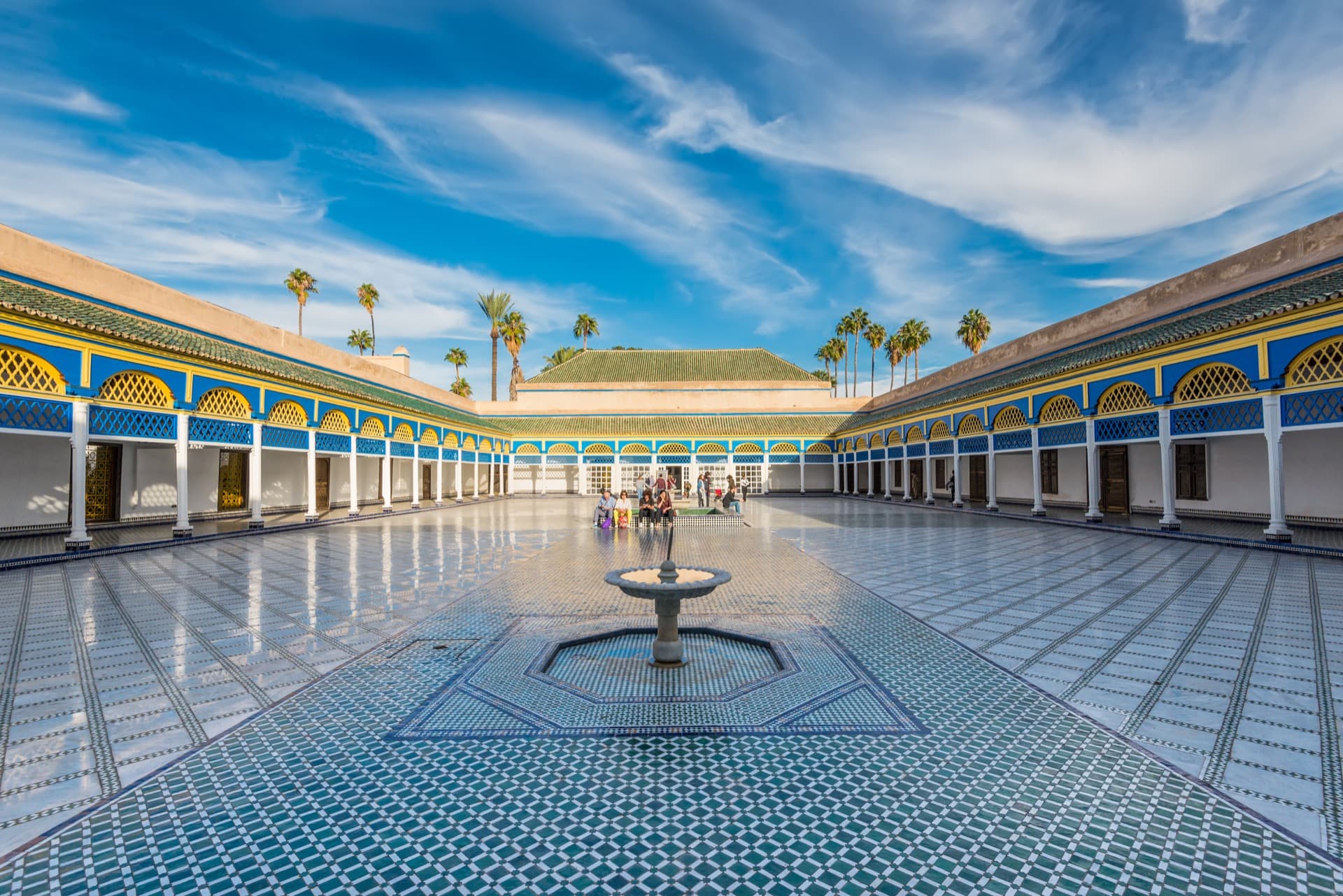
The palace is a series of courtyards, gardens, salons and annexes, notable for both its layout and its decoration. The Ministry names marble, zellij, carved and painted wood, stucco, stained glass and moucharabieh work, with fountains and lush gardens in the courtyards. One large open-air courtyard is paved in marble and zellij and has a gallery of carved wooden columns opening onto a reception hall with a painted ceiling.
In context
In ATIP’s 3-day Marrakech itinerary, Bahia Palace anchors the second day alongside the Ben Youssef Madrasa, a day built around craftsmanship.