ITINERARY · EGYPT
2 Days in Luxor: Karnak & the Valley of the Kings
Luxor’s two reviewed anchors lie on different sides of the Nile, so this plan gives each its own day: the Karnak Temple Complex first, then the Valley of the Kings. ATIP’s destination guidance suggests two to three days for Luxor; two days cover these two anchors without rushing. It uses only places ATIP has reviewed. We have not verified opening hours, ticket fees, transport schedules or travel times, so none are given: confirm them before you go. Three optional additions follow: Luxor Temple, the Hatshepsut Temple on the west bank and the Mummification Museum.
The itinerary at a glance
- Day 1 — Karnak Temple Complex
- Day 2 — Valley of the Kings
- Option — Luxor Temple
- Option — Hatshepsut Temple (west bank)
- Option — Mummification Museum
- Best for
- Ancient history, temples and photography
- Season
- The cooler months, roughly October to April, are generally more comfortable for temple visits, tomb exploration and other outdoor sightseeing
- Getting around
- Luxor is divided by the Nile into East and West Banks. Taxis, arranged drivers and local ferries are practical for moving between major sites, while some central East Bank sights are walkable.
Day 1
Karnak Temple Complex
Begin at a vast temple complex on the Nile at Luxor, built and extended over many centuries and known for its great hypostyle hall.
Karnak Temple Complex
A vast temple complex on the Nile at Luxor, built and extended over many centuries and known for its great hypostyle hall.
Keep the rest of the day unplanned. ATIP does not state opening times or entry arrangements, so check them directly before you go.
Day 2
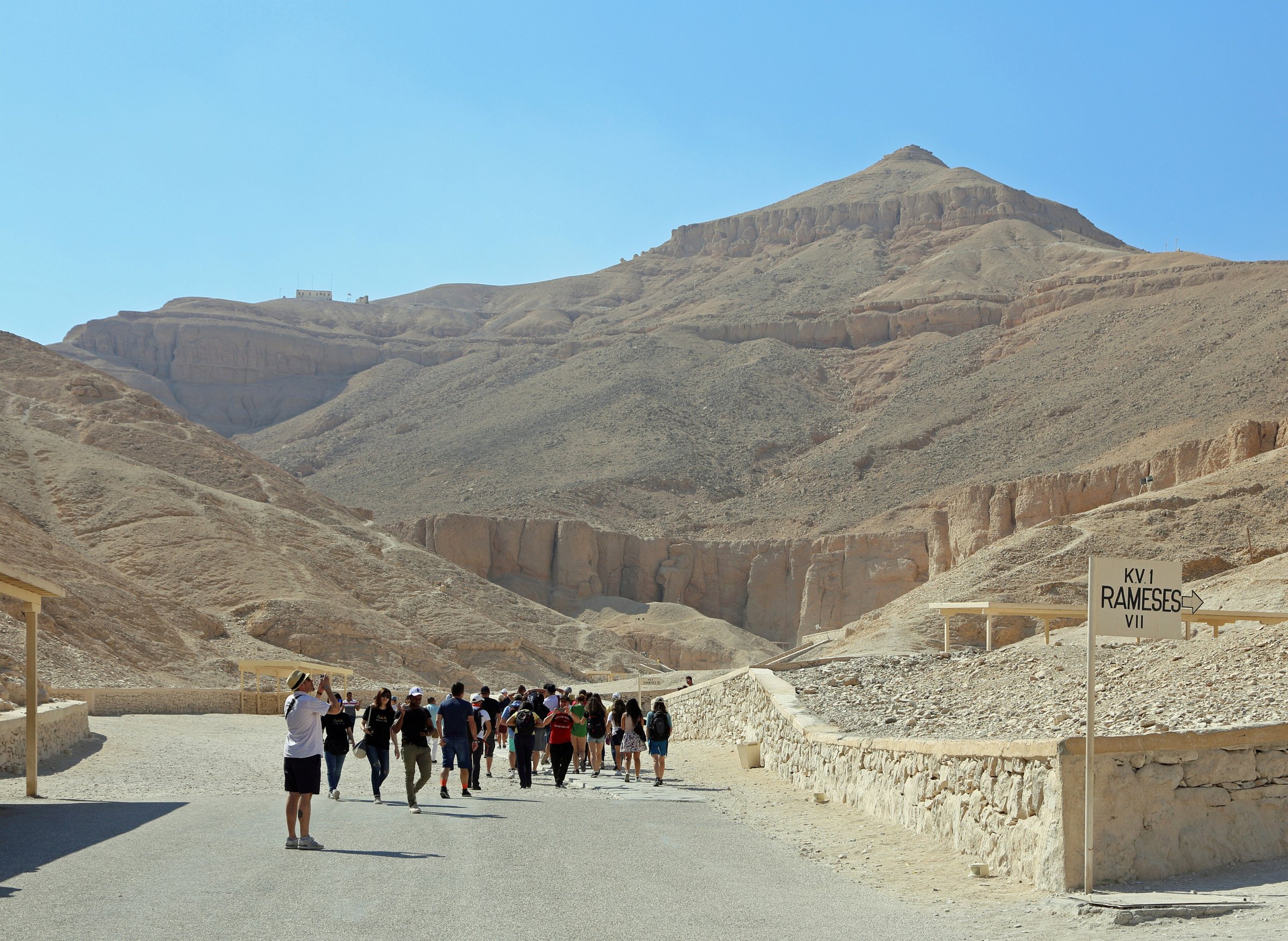
Valley of the Kings
Cross to the west bank for the UNESCO-listed royal burial ground where pharaohs and powerful nobles were entombed for nearly 500 years, including Tutankhamun.
Valley of the Kings
Photo: Marc Ryckaert · CC BY-SA 4.0 · Source The UNESCO-listed royal burial ground on the Nile's west bank, where pharaohs and powerful nobles were entombed for nearly 500 years, including Tutankhamun.
Major sites lie on both banks of the Nile, so plan transport between them rather than treating Luxor as one compact area. Check current visiting arrangements directly; they are not verified here.
Option
Luxor Temple
As an add-on to Karnak, or on a third day, visit Luxor Temple in ancient Thebes, whose surviving structures include work by Hatshepsut, Amenhotep III and Ramesses II and whose colonnade connects it with the Opet Festival procession from Karnak.
Luxor Temple
A temple in ancient Thebes, now Luxor, whose surviving structures include work by Hatshepsut, Amenhotep III and Ramesses II. Its great colonnade and reliefs connect it with the Opet Festival, when divine images were brought in procession from Karnak.
Treat this as an add-on. ATIP states no routes or travel times between Luxor Temple and Karnak; confirm access and arrangements directly.
Option
Hatshepsut Temple (west bank)
As a west-bank addition to the Valley of the Kings, or in its place, visit Hatshepsut’s mortuary temple at Deir al-Bahari, which has three levels with colonnades.
Hatshepsut Temple
Hatshepsut’s mortuary temple at Deir al-Bahari on Luxor’s west bank has three levels with colonnades. Its painted reliefs include scenes of religious rituals and the expedition to Punt, while statues depict Hatshepsut in the form of Osiris.
This is a west-bank visit, like the Valley of the Kings, so plan transport across the Nile rather than treating Luxor as one compact area. ATIP states no routes or travel times; confirm access and arrangements directly.
Option
Mummification Museum
For a museum alternative, or as an add-on, visit the Mummification Museum in Luxor, which explains ancient Egyptian mummification and its ritual and religious significance.
Mummification Museum
A museum in Luxor explaining ancient Egyptian mummification and its ritual and religious significance. Displays include tools used in the process, canopic jars, decorated coffins, mummified remains, amulets and statues of deities.
Treat this as an alternative or an add-on. ATIP states no location details beyond Luxor, no routes and no travel times; confirm arrangements with the museum.
Good to know before you go
- Hours, ticket fees, transport schedules and travel times are not verified by ATIP and are deliberately not stated here. Always confirm them with the venue or operator.
- ATIP is a discovery and planning platform. It does not sell tickets, transport or tours, and online hotel and flight booking is not yet available.
- West bank: the Valley of the Kings and, as an option, the Hatshepsut Temple. Luxor Temple and the Mummification Museum are optional additions in Luxor. ATIP states no routes or travel times between any of these places.
- Confirm current local guidance before your visit, particularly for transport, park or site access and entry requirements.
Quick answers
Is two days enough for Luxor?
ATIP’s destination guidance suggests two to three days. Two days cover the Karnak Temple Complex and the Valley of the Kings, the two places ATIP has reviewed for this guide; Luxor has more to see, so add a third day if you want a slower pace. Luxor Temple, the Hatshepsut Temple (west bank) and the Mummification Museum are listed as optional additions.
Do I need to cross the Nile?
Yes. Major sites lie on both banks of the Nile, so plan transport between the East and West Banks. ATIP’s destination guidance mentions taxis, arranged drivers and local ferries.
When is the best time to visit Luxor?
The cooler months, roughly October to April, are generally more comfortable for temple visits, tomb exploration and other outdoor sightseeing.
Can I book this itinerary on ATIP?
Not yet. ATIP currently offers destination discovery and trip planning; online hotel and flight booking is coming soon. Arrange any tickets, transport or tours directly with the provider.
Sources and further reading
Independent references the ATIP team reviewed. They are not partners or suppliers of ATIP.
Explore more
About this guide
Written and maintained by the Africa Travel Intelligence Platform (ATIP) editorial team, using only places and records ATIP has reviewed. Facts we have not verified, such as opening hours, prices and schedules, are left out rather than guessed.
Read about ATIP’s general editorial approach It describes how ATIP works in general and does not verify individual guides.
Make it yours
Tell the ATIP AI Planner what you enjoy and how long you have, and it will build a plan from ATIP’s reviewed places.
Search flights to AfricaCompare hotel rates for your datesExplore tours and activities in Africa
This is an editorial itinerary. ATIP does not sell or organize any of these visits.