Why visit
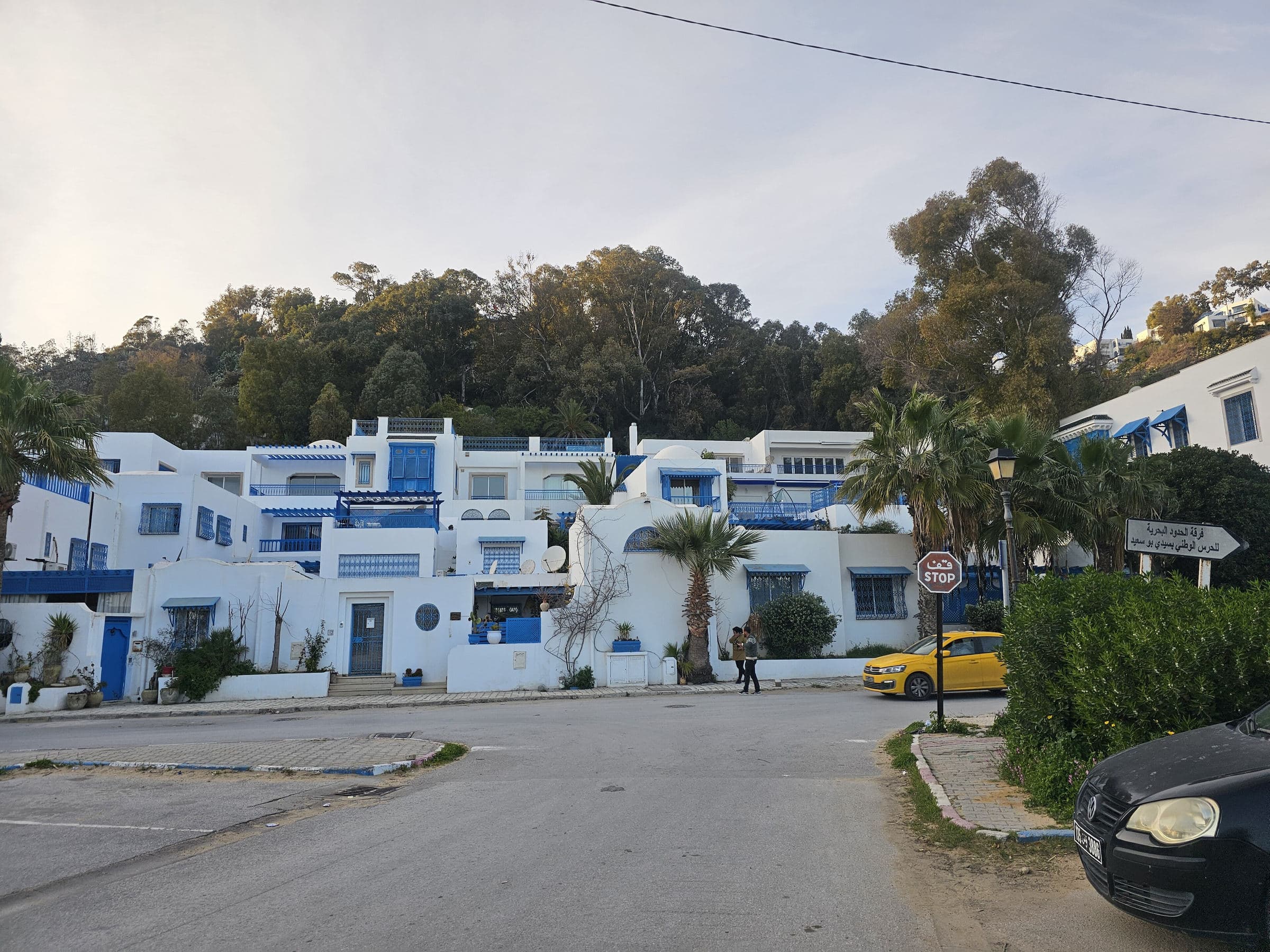
Discover Tunisia, the national tourism site, presents Sidi Bou Saïd as an elegant village next to Carthage, where blue-and-white houses climb the hillside facing the sea. It describes the village as a former favourite holiday place of privileged Tunis families, who lived there under the protection of the tomb of Sidi Abou Said, a saint of the 13th century.
What to experience
Sidi Bou Saïd is a place to walk rather than a single sight: narrow paved streets between blue mashrabiya latticework, pink bougainvillea and wrought iron, and painted doors, some studded with black nails set in stars, flowers, cypress or fish shapes. Discover Tunisia suggests views of the sea from the Sidi Chabaane café, the lighthouse or the old cemetery, and notes that artists live in the village, that its souk sells carpets, ceramics and leather slippers, and that a palace built in 1912 by Baron Rodolphe d’Erlanger is now a museum that hosts concerts. Some houses have become art galleries or guesthouses.
Planning a visit
Sidi Bou Saïd is a village rather than a ticketed monument, so ATIP has no recorded opening hours or admission for the village; the museum palace, galleries, cafés and guesthouses each keep their own arrangements, which you should confirm locally. Discover Tunisia says the small TGM train links La Marsa, Sidi Bou Saïd, Carthage, La Goulette and Tunis, and that a taxi fee can be agreed for Carthage’s scattered sites. ATIP has not verified timetables or fares.
In context
ATIP’s 3-day Tunis itinerary suggests Sidi Bou Saïd as a separate visit beside Carthage rather than in central Tunis. The Archaeological Site of Carthage and Tourbet el Bey, in the Tunis medina, have their own ATIP pages.