Why visit
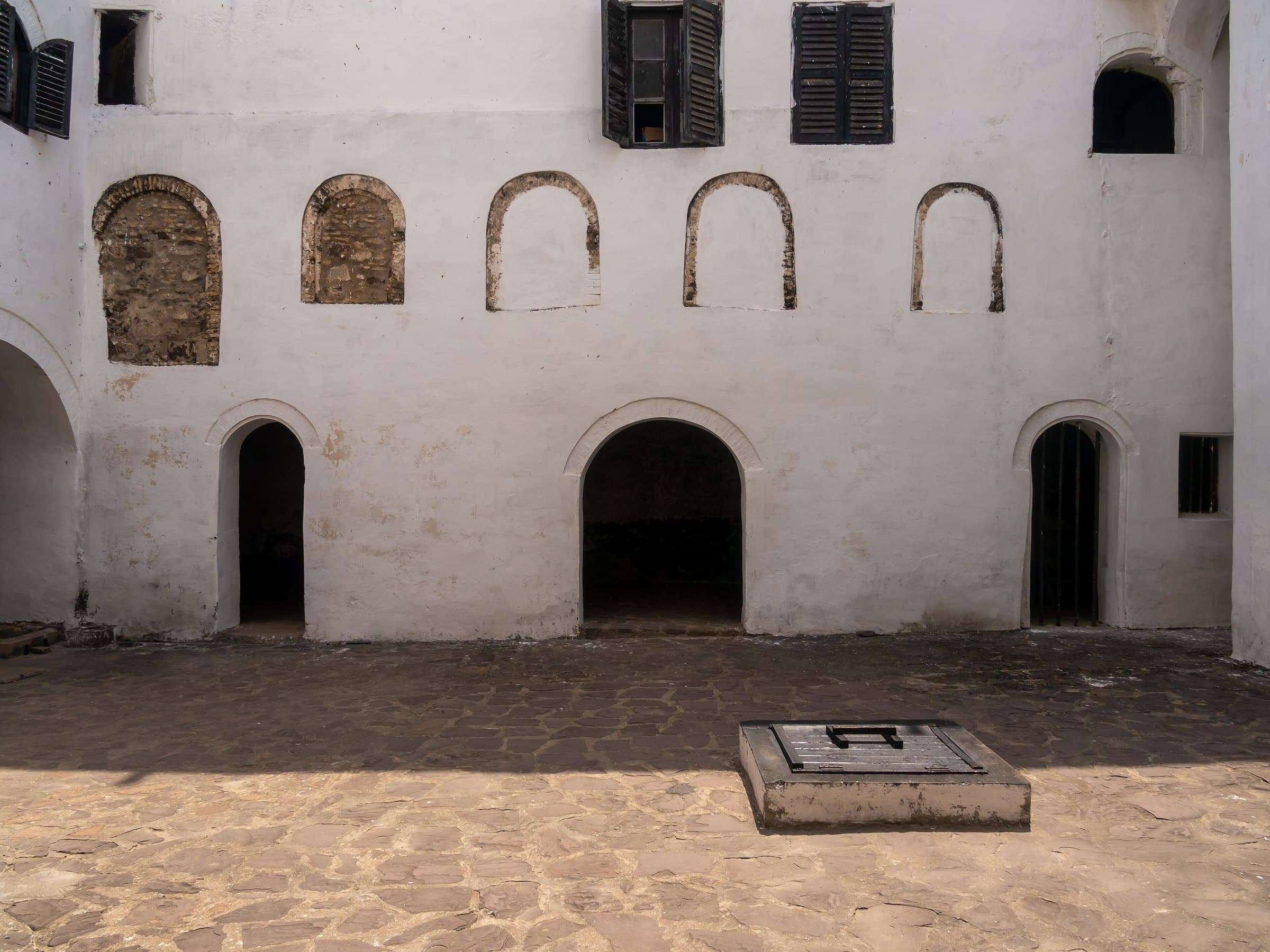
Elmina Castle, also called St George’s Castle, was founded by the Portuguese in 1482 and is listed as a UNESCO World Heritage site. The Visit Ghana tourism site describes it as the first major European construction in tropical Africa. The Dutch took it in 1637 and it was ceded to the British in 1872. Gold was the first trade here; later enslaved people became the main commerce, and storerooms were converted into dungeons.
What to experience
The guided tour covers the dungeons, the punishment cells, the Door of No Return and the turret room where the British held the Asante king Prempeh I for four years. The castle also houses a museum, set up in 1996, with displays on the Asante of Elmina and on local trade with Europeans, including gold weights, shackles and textiles. From the battlements you look over the fishing harbour and Fort St Jago across the lagoon.
Planning a visit
Guided tours are available and cover the dungeons, so plan to join one. Visit respectfully, especially the spaces associated with enslavement and remembrance. Fort St Jago, the Dutch cemetery and the Posuban buildings of Elmina are within walking distance, according to Visit Ghana. ATIP has not recorded current opening hours or admission: confirm them, and guided-tour availability, locally.
In context
ATIP’s 4-day Ghana itinerary gives Elmina Castle its own day on the southern route, between Cape Coast Castle and the Kakum Canopy Walkway.