Why visit
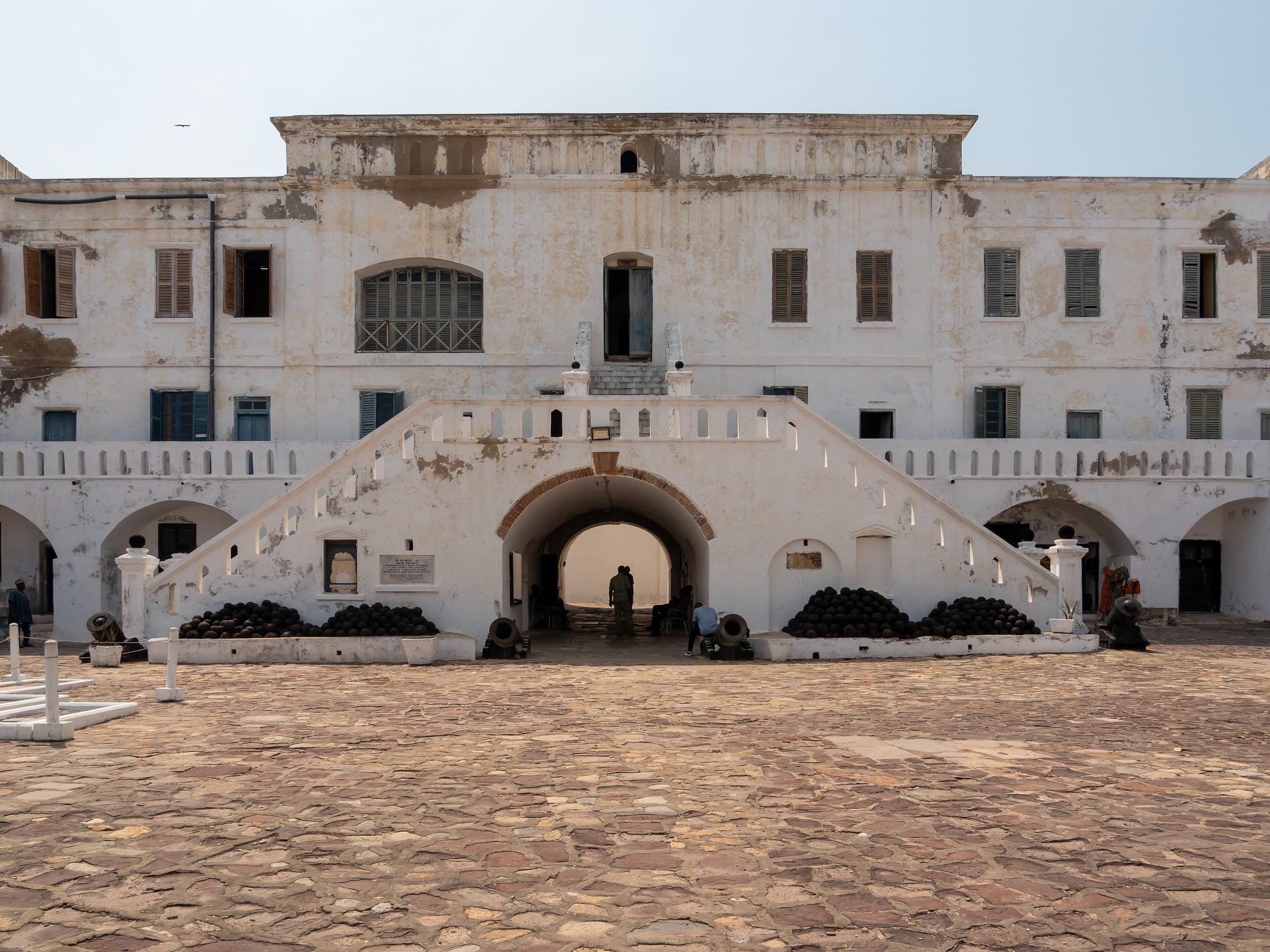
Visit Ghana calls Cape Coast Castle the largest of the buildings holding the legacy of the transatlantic slave trade in Ghana, and a UNESCO World Heritage site. The Ghana Museums and Monuments Board, which looks after it, dates the permanent structure to a fort the Swedes built in 1653 on the site of a Portuguese trade lodge of 1555. It then changed hands between the Danes, a local Fetu chief, the Dutch and, in the 1660s, the British, who had made it a castle by 1700. The Board and Visit Ghana differ by a year on two of these dates, so ATIP gives only the decade.
What to experience
The guided tour takes in Dalzel Tower, the dungeons, and the cannons and mortars used in the castle’s defence. Inside, the West African Historical Museum holds ceremonial drums, old muskets, shackles from the slave trade and ancient pottery, and there is a Ghanaian arts-and-crafts shop. Visit Ghana also notes that the castle housed the first castle schools, and that it was the seat of British administration of the Gold Coast until the capital moved to Christiansborg Castle in Accra in 1877.
Planning a visit
Guided tours are the way to see the dungeons, so plan to join one, and visit respectfully: this is a place of enslavement and remembrance. The documented record, such as who held the castle and when the British banned the slave trade (1807, according to both sources), is separate from estimates of the trade’s scale: Visit Ghana quotes one such estimate for around 1700, and ATIP does not repeat figures that are interpretation rather than record. ATIP has not recorded opening hours or admission, so confirm them locally.
In context
ATIP’s 4-day Ghana itinerary visits Cape Coast Castle before Elmina Castle and the Kakum Canopy Walkway. Fort Victoria and Fort William, also in Cape Coast, have their own ATIP pages.